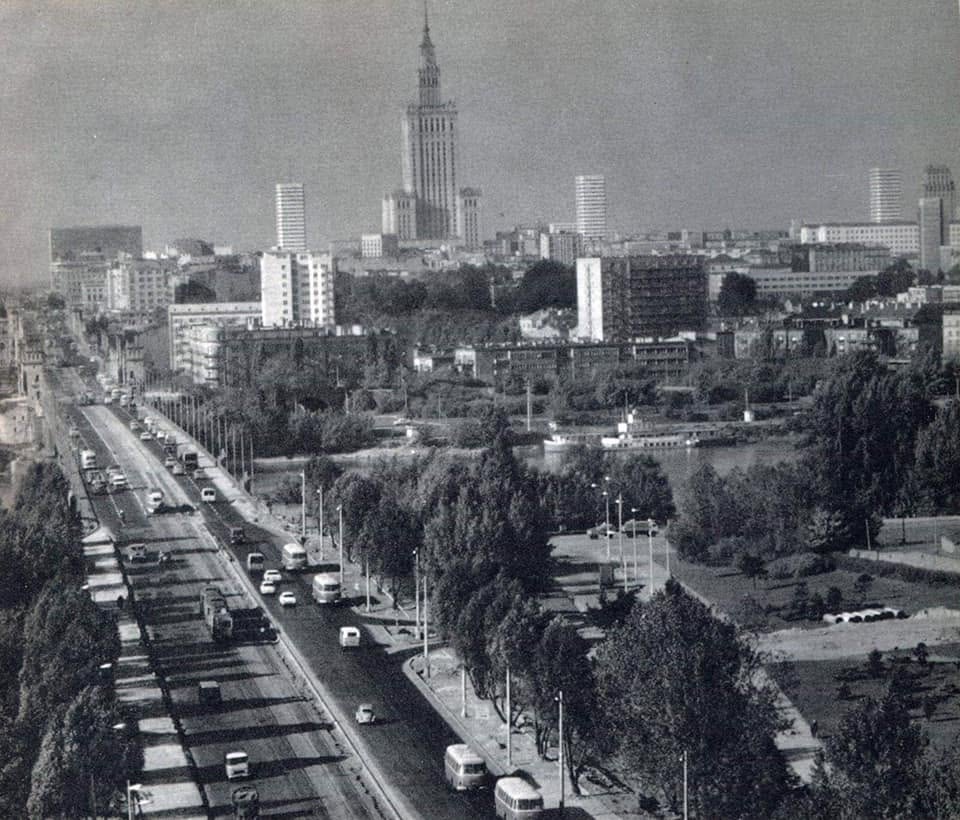
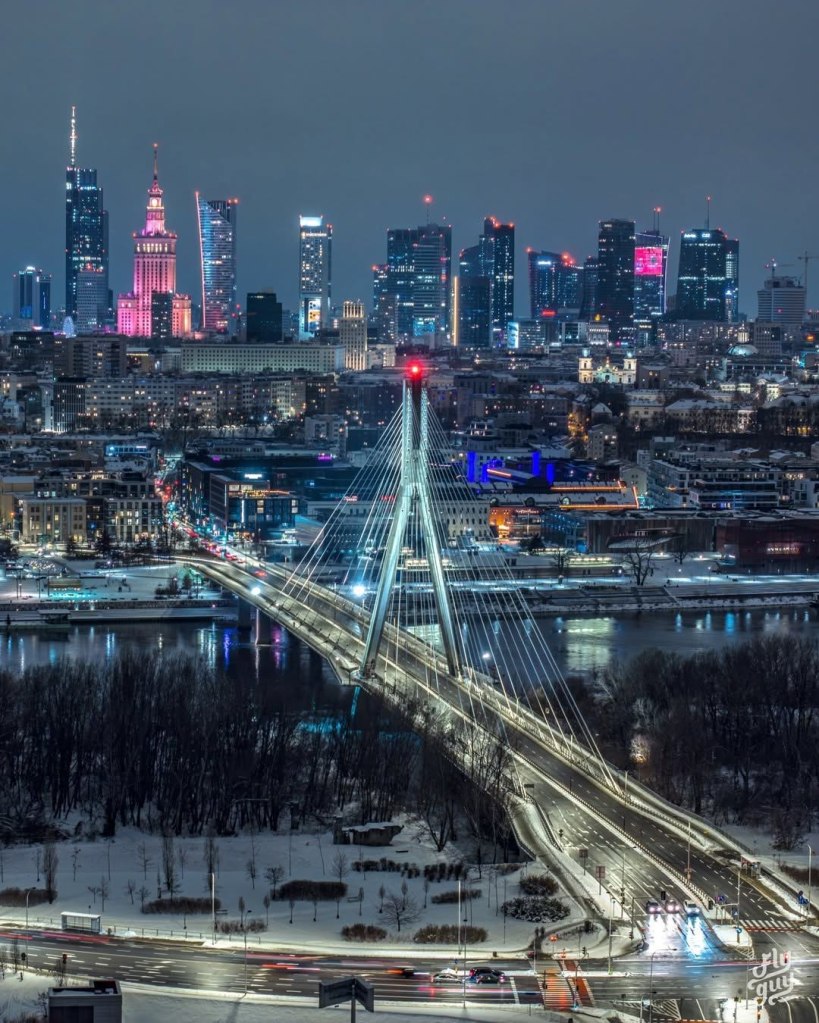
Polish cities have been making the rounds on social media and YouTube channels in recent years. Travelers are enjoying all the beautiful town squares, restaurants and the safe, clean atmosphere. In modern Warsaw you will see the skyline dotted with modern glass skyscrapers, the largest one being the new Varso Place which is now the tallest building in the EU. The shopping malls in Poland are spectacular and quite busy. The largest one in Warsaw, the Westfield Arkadia boasts over 240 stores and places to eat (Westfield Arkadia | URW, n.d.). Westfield Arkadia is owned by Unibail-Rodamco-Westfield, a French company and one of the largest real estate companies in Europe. They own several more shopping centres in several Polish cities. Forty years ago, before communism fell, this would have been a pipe dream. Poland wasn’t always this way. Prior to communism being turfed out by powerful social movements the Polish economy was in shambles for decades.
By the 1970s Poland had succumbed to stagflation and constantly declining living standards (Kemme & Crane, 1984). Even capitalist economies were in the throes of recession in the early 1970s suffering rising prices for necessities and rising unemployment (Hunt & Lautzenheiser, 2011). Poland and other communist states were also doing poorly economically. By 1970, Poland was facing political unrest and protests due to the poor economic conditions (The December ’70 Trail | Visit Szczecin, n.d.). The Marxist planned economies simply weren’t working by this point. Since they were still under Moscow’s control Poland was not able to throw in the towel on this communist experiment just yet. A new leader came on board in 1970, Edward Gierek, and he had some big ideas.
Edward Gierek had a new plan – and it worked for awhile. Gierek sent the government on a Keynesian government spending spree with the aim of improving supplies of necessities like food and fuel, consumer goods and eventually raise living standards (Jarząbek, 2014). On the flip side this was all financed by a borrowing binge from Western nations (Kemme & Crane, 1984). When people have enough to eat, they do not tend to protest. Gierek was trying to keep the regime stable and keep Moscow from interfering as they did in Czechoslovakia in 1968 and Hungary in 1956 (Jarząbek, 2014). Some of the new ideas were neoliberalism trapped in communism’s body. Gierek tried to encourage technological advances to increase growth as well as increase the availability of consumer goods however with these ideas stuck in a command economy this did not achieve significant growth (Kemme & Crane, 1984). This massive modernization push did not end well as all the borrowing caught up to the Polish state.
Neoliberalism in a communist body did not work. Despite the push to modernize, the skeleton of the economy could not absorb what the government was trying to do. It simply wasn’t possible to have individuals determine their own outcomes when the weight of the state will not let them. Poland can’t quickly upgrade its infrastructure to accommodate an attempt to increase availability of consumer goods when the government controls the infrastructure. Exports couldn’t keep up and the worldwide financial downturn coupled with the oil crisis also decreased demand for Polish exports (Commanding Heights : Poland Economic | on PBS, n.d.). The foreign debts came due and Poland did not have any money to pay them with. As previously stated, when people have enough to eat, they tend not to protest. But when the living standards declined so much at the end of the 1970s, this created social unrest (Kemme & Crane, 1984) and a new social movement was born. The social movement, Solidarity, which began as a trade union in Gdansk, became a thorn in the side of the communist government through out the new decade of the 1980s. This was when the wheels really started to fall off for the communists and the long march to a new Poland began.
References:
Commanding Heights: Poland Economic | on PBS. (n.d.). Retrieved August 1, 2026, from https://www.pbs.org/wgbh/commandingheights/lo/countries/pl/pl_economic.html
Hunt, E. K., & Lautzenheiser, M. (2011). Neoclassical Ideology and the Myth of the Self-Adjusting Market: The Writings of John Maynard Keynes. In History of Economic Thought (3rd ed.). Routledge.
Jarząbek, W. (2014). Polish economic policy at the time of détente, 1966–78. European Review of History: Revue Européenne d’histoire, 21(2), 293–309. https://doi.org/10.1080/13507486.2014.888707
Kemme, D. M., & Crane, K. (1984). The Polish economic collapse: Contributing factors and economic costs. Journal of Comparative Economics, 8(1), 25–40. https://doi.org/10.1016/0147-5967(84)90019-2
The December ’70 Trail | Visit Szczecin. (n.d.). Retrieved August 8, 2026, from https://visitszczecin.eu/en/culture/87-december-70-trail
Westfield Arkadia | URW. (n.d.). Unibail Rodamco Westfield. Retrieved July 20, 2026, from https://www.urw.com/westfield-arkadia
 Lindsay's Lessons
Leave a comment